In an era where data breaches make headlines daily, understanding the General Data Protection Regulation (GDPR) is essential for businesses aiming to thrive. As organizations lean increasingly on digital solutions, the complexities of data protection can feel overwhelming. However, navigating GDPR doesn’t need to be a daunting task. By unlocking key insights into this regulation, businesses can not only ensure compliance but also build trust with customers through responsible data management. From understanding consent and data subject rights to implementing robust data protection strategies, this guide will equip you with the essential knowledge to turn GDPR challenges into opportunities. Join us as we explore the crucial elements of GDPR and empower your business to confidently safeguard personal data in today’s fast-paced digital landscape. Embrace these insights and take the definitive steps toward becoming a responsible steward of the data.
Understanding GDPR: A Brief Overview
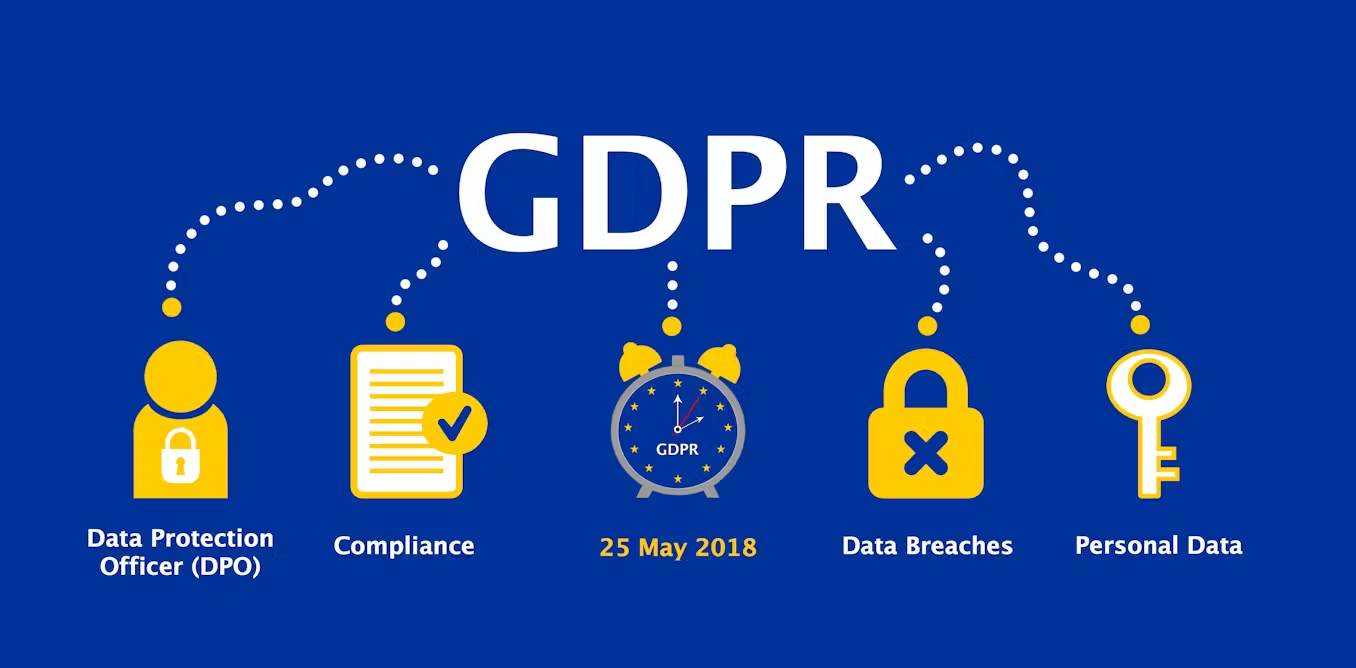
The General Data Protection Regulation (GDPR) is a comprehensive data protection law enacted by the European Union (EU) that came into effect on May 25, 2018. It was designed to harmonize data privacy laws across Europe, protect and empower all EU citizens’ data privacy, and reshape the way organizations across the region approach data privacy. GDPR impacts any organization that processes personal data of individuals within the EU, regardless of where the organization is based. This regulation sets stringent guidelines for data handling, emphasizing transparency, security, and accountability by organizations.
GDPR is built on a foundation of six data protection principles: lawfulness, fairness, and transparency; purpose limitation; data minimization; accuracy; storage limitation; and integrity and confidentiality. These principles are the backbone of the regulation and dictate how personal data should be processed. By adhering to these principles, businesses can ensure they are respecting individuals' rights and maintaining the integrity of their personal data. Understanding these core principles is crucial for any business aiming to comply with GDPR and protect its customers’ privacy.
One of the key features of GDPR is its extraterritorial scope. This means that even if a business is not located within the EU, it still must comply with GDPR if it processes personal data of individuals residing in the EU. This broad reach underscores the global importance of the regulation and its influence on data protection standards worldwide. Businesses must grasp the implications of GDPR to avoid potential penalties and build a trustworthy relationship with their customers by ensuring robust data protection practices.
Key Principles of GDPR Compliance
GDPR is anchored in six core principles that govern how personal data should be processed. The first principle, lawfulness, fairness, and transparency, requires that data processing activities be conducted in a lawful and fair manner, with transparency being a key aspect. Organizations must inform individuals about how their data is being used, who it is being shared with, and the purpose of the processing. This principle ensures that individuals are not misled or deceived about how their personal data is handled.
The second principle, purpose limitation, mandates that personal data be collected for specified, explicit, and legitimate purposes and not further processed in a manner incompatible with those purposes. This means businesses must clearly define the reasons for data collection and ensure that any further processing aligns with the original intent. The third principle, data minimization, emphasizes that only the data necessary for the specified purpose should be collected and processed. This helps in reducing the risk of data breaches and ensures that unnecessary personal data is not stored or processed.
Accuracy is the fourth principle, which requires that personal data be accurate and, where necessary, kept up to date. Incorrect or outdated data should be rectified or erased to avoid misleading information. The fifth principle, storage limitation, dictates that personal data should be kept in a form that permits identification of data subjects for no longer than is necessary for the purposes for which the data is processed. Finally, the principle of integrity and confidentiality demands that personal data be processed in a manner that ensures its security, including protection against unauthorized or unlawful processing and accidental loss, destruction, or damage.
The Importance of Data Protection for Businesses
In today's digital age, data is a valuable asset for businesses. It helps in understanding customer behavior, improving services, and driving growth. However, with the increasing amount of data being collected and processed, the risks associated with data breaches and misuse have also escalated. Data protection is crucial for businesses to safeguard their reputation, maintain customer trust, and comply with legal obligations. Failure to protect personal data can result in significant financial losses, legal repercussions, and damage to a business's reputation.
GDPR has elevated the importance of data protection by setting high standards for data processing and holding businesses accountable for non-compliance. By implementing robust data protection measures, businesses can mitigate the risks of data breaches and ensure compliance with GDPR. This, in turn, helps in building customer trust, as individuals feel more secure knowing that their personal data is being handled responsibly. Trust is a critical factor in customer loyalty and retention, and businesses that prioritize data protection are likely to gain a competitive advantage.
Moreover, data protection is not just about compliance; it also offers strategic benefits. By adopting GDPR-compliant practices, businesses can streamline their data management processes, improve data quality, and enhance operational efficiency. Data protection measures such as encryption, anonymization, and access controls can help in safeguarding sensitive information and reducing the risk of unauthorized access. Additionally, having a clear data protection strategy can foster innovation by enabling businesses to explore new opportunities while ensuring that data privacy is maintained.
Common GDPR Misconceptions
Despite being in effect for several years, there are still many misconceptions about GDPR that can lead to non-compliance. One common misconception is that GDPR only applies to businesses located within the EU. In reality, GDPR has a broad extraterritorial scope and applies to any organization that processes personal data of individuals in the EU, regardless of where the organization is based. This means that businesses outside the EU must also comply with GDPR if they offer goods or services to EU residents or monitor their behavior.
Another misconception is that GDPR compliance is solely the responsibility of the IT department. While IT plays a crucial role in implementing technical measures for data protection, GDPR compliance is a collective responsibility that involves various departments, including legal, marketing, HR, and management. Each department must understand its role in data processing activities and ensure that GDPR principles are integrated into their operations. This collaborative approach helps in fostering a culture of data protection within the organization.
A third misconception is that obtaining consent is the only legal basis for processing personal data under GDPR. While consent is one of the six lawful bases for data processing, it is not the only one. Other lawful bases include the performance of a contract, compliance with a legal obligation, protection of vital interests, performance of a task carried out in the public interest, and legitimate interests. Businesses must assess their data processing activities and determine the most appropriate legal basis for each activity to ensure compliance with GDPR.
Steps to Achieve GDPR Compliance
Achieving GDPR compliance requires a systematic approach that involves several key steps. The first step is to conduct a data audit to identify what personal data is being collected, where it is stored, how it is processed, and who has access to it. This audit helps in mapping the data flow within the organization and identifying potential risks and gaps in data protection practices. It also provides a foundation for developing a comprehensive data protection strategy.
The next step is to implement data protection measures that align with GDPR requirements. This includes adopting technical and organizational measures such as data encryption, pseudonymization, access controls, and regular security assessments. Businesses must also establish policies and procedures for data handling, including data retention, data breach response, and data subject rights. These measures help in ensuring that personal data is processed securely and in accordance with GDPR principles.
Another critical step is to provide training and awareness programs for employees to ensure they understand their responsibilities under GDPR. Regular training sessions can help in reinforcing the importance of data protection and keeping employees updated on the latest regulatory developments. Additionally, appointing a Data Protection Officer (DPO) can be beneficial, especially for organizations that process large volumes of personal data. The DPO can oversee compliance efforts, conduct risk assessments, and act as a point of contact for data protection authorities and data subjects.
Data Subject Rights under GDPR
GDPR grants several rights to individuals, known as data subjects, to empower them with greater control over their personal data. One of the fundamental rights is the right to be informed, which requires businesses to provide clear and transparent information about how personal data is being used. This includes details about the purposes of data processing, data retention periods, and the recipients of the data. Providing this information helps in building trust and ensuring that data subjects are aware of their rights.
Another key right is the right of access, which allows data subjects to request access to their personal data held by an organization. Businesses must respond to access requests within one month and provide a copy of the data along with information about how it is being processed. The right to rectification allows data subjects to request corrections to inaccurate or incomplete data. Businesses must promptly rectify any errors to ensure the accuracy of personal data.
The right to erasure, also known as the right to be forgotten, allows data subjects to request the deletion of their personal data under certain circumstances. This includes situations where the data is no longer necessary for the purposes for which it was collected, or where the data subject withdraws their consent. The right to restrict processing allows data subjects to limit the processing of their data under specific conditions. Additionally, the right to data portability enables data subjects to receive their data in a structured, commonly used, and machine-readable format and transfer it to another controller. Finally, the right to object allows data subjects to object to the processing of their data based on legitimate interests or for direct marketing purposes.
Consequences of Non-Compliance: Fines and Penalties
Non-compliance with GDPR can result in severe consequences, including hefty fines and reputational damage. GDPR sets out a tiered approach to penalties, with the maximum fine for the most serious infringements being up to €20 million or 4% of the annual global turnover of the preceding financial year, whichever is higher. These serious infringements include violations of the core principles of data processing, failure to comply with data subject rights, and unauthorized international data transfers.
For less severe infringements, the maximum fine can be up to €10 million or 2% of the annual global turnover, whichever is higher. These infringements include failures to maintain records of processing activities, not notifying supervisory authorities and data subjects about data breaches, and not conducting Data Protection Impact Assessments (DPIAs) when required. It is important for businesses to understand the potential financial implications of non-compliance and take proactive steps to mitigate these risks.
In addition to financial penalties, non-compliance can lead to reputational damage and loss of customer trust. Data breaches and misuse of personal data can attract negative publicity, resulting in a loss of business and competitive disadvantage. Customers are increasingly aware of their data protection rights and are likely to avoid businesses that do not prioritize data privacy. Therefore, maintaining GDPR compliance is not just about avoiding fines; it is also about protecting the business's reputation and building a strong relationship with customers.
Tools and Resources for GDPR Compliance
There are several tools and resources available to help businesses achieve and maintain GDPR compliance. Data mapping tools can assist in creating a comprehensive inventory of personal data, identifying data flows, and pinpointing areas of risk. These tools provide a visual representation of data processing activities, making it easier to assess compliance and implement necessary measures. Additionally, Data Protection Impact Assessment (DPIA) tools can help in evaluating the impact of data processing activities on privacy and identifying ways to mitigate risks.
Privacy management software can streamline GDPR compliance efforts by automating processes such as consent management, data subject rights requests, and data breach notifications. These tools offer centralized dashboards that provide real-time insights into compliance status and help in tracking and managing data protection activities. Security tools such as encryption, pseudonymization, and access controls are essential for protecting personal data from unauthorized access and breaches.
Training and awareness programs are also crucial for ensuring that employees understand their responsibilities under GDPR. Several organizations offer GDPR training courses, webinars, and certification programs that cover various aspects of the regulation. Additionally, guidance documents and best practice frameworks provided by data protection authorities, such as the European Data Protection Board (EDPB), can offer valuable insights and practical advice on GDPR compliance. Leveraging these tools and resources can help businesses navigate the complexities of GDPR and ensure robust data protection practices.
Future Trends in Data Protection Regulations
As data protection continues to evolve, businesses must stay informed about emerging trends and regulatory developments. One significant trend is the increasing focus on data ethics and responsible data use. Beyond legal compliance, businesses are expected to adopt ethical practices that prioritize individual privacy and ensure that data is used in a fair and transparent manner. This includes implementing privacy by design and default principles, which embed data protection measures into the development of products and services from the outset.
Another trend is the growing importance of international data transfers and the need for robust mechanisms to ensure data protection across borders. With the invalidation of the EU-US Privacy Shield, businesses must rely on alternative transfer mechanisms, such as Standard Contractual Clauses (SCCs) and Binding Corporate Rules (BCRs), to ensure compliance with GDPR. Additionally, there is a push for greater harmonization of data protection laws globally, with countries adopting GDPR-like regulations to enhance privacy protections.
The rise of emerging technologies, such as artificial intelligence (AI), machine learning, and the Internet of Things (IoT), also presents new challenges and opportunities for data protection. These technologies can offer innovative solutions for data management and security, but they also raise concerns about privacy and data misuse. Regulators are increasingly focusing on the ethical use of these technologies and the need for transparency and accountability in their deployment. Businesses must stay ahead of these trends and adapt their data protection strategies to address the evolving landscape.
Conclusion: Navigating GDPR Successfully
Navigating GDPR requires a comprehensive understanding of the regulation and a proactive approach to compliance. By adhering to the key principles of GDPR and implementing robust data protection measures, businesses can not only ensure compliance but also build trust with their customers. Understanding data subject rights and addressing common misconceptions about GDPR are critical steps in fostering a culture of data protection within the organization.
Achieving GDPR compliance involves conducting thorough data audits, implementing technical and organizational measures, and providing continuous training and awareness programs for employees. Leveraging tools and resources can streamline compliance efforts and enhance data protection practices. Staying informed about future trends and regulatory developments is essential for adapting to the evolving data protection landscape and ensuring long-term compliance.
Ultimately, GDPR compliance is not just about avoiding fines and penalties; it is about demonstrating a commitment to responsible data management and protecting individuals' privacy. By embracing these insights and taking definitive steps, businesses can confidently navigate GDPR and become responsible stewards of personal data in today's fast-paced digital landscape.